Luxury Home Remodeling for the Home You Want to Keep
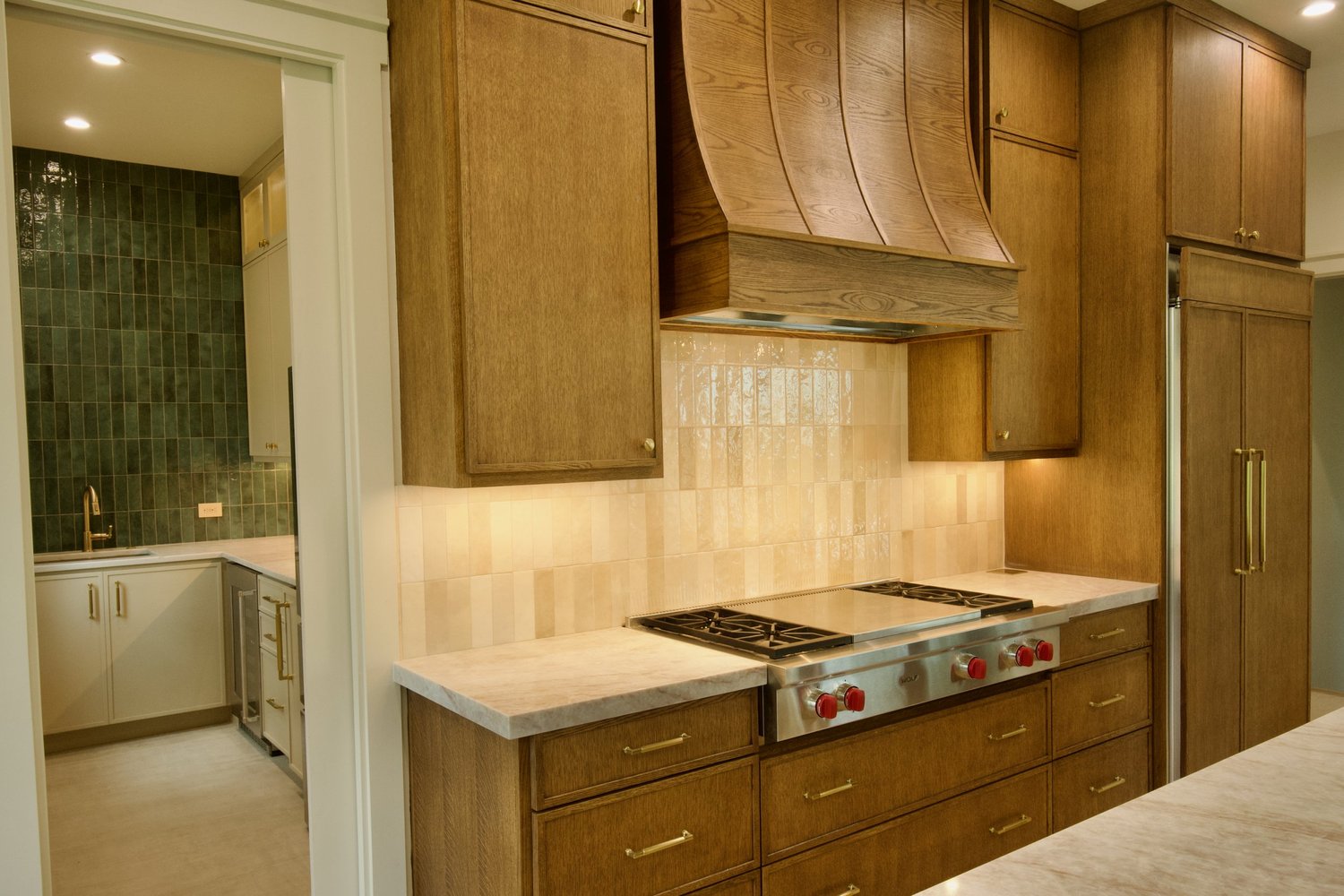
Whole-home remodels, additions, kitchens, and primary suites across the Texas Hill Country. This photo is our work.
You Do Not Have a House Problem. You Have a Decision Problem.
Most people who call a remodeler are quietly weighing three doors at once: fix this house, sell it and move, or tear down and start over. Each has a real price tag, and almost nobody in the industry will help you compare them, because everyone you ask sells only one of the doors.
We build new homes and we remodel existing ones, so we do not need to steer you. The walkthrough looks at what your house can structurally give you, what the location is worth to your life, and what each path roughly costs. When remodeling is the wrong answer for your house, hearing it early is worth more than any brochure.
And when it is the right answer, the project further down this page shows what a remodel can achieve.
The Work We Take On
Luxury here is a standard of work, not a minimum size. Smaller scopes get the same materials discipline as the flagship projects, and the same two owners running the job.
- FlagshipWhole-Home RemodelsThe entire house rethought, typically 12 to 24 months
- Large AdditionsNew square footage engineered into the existing structure
- KitchensChef-grade spaces, typically 4 to 9 months
- Primary SuitesBedroom, bath, and closet as one designed retreat
- Casitas & Guest HousesSeparate quarters that match the main house
What $1.3 Million of Remodel Actually Looks Like
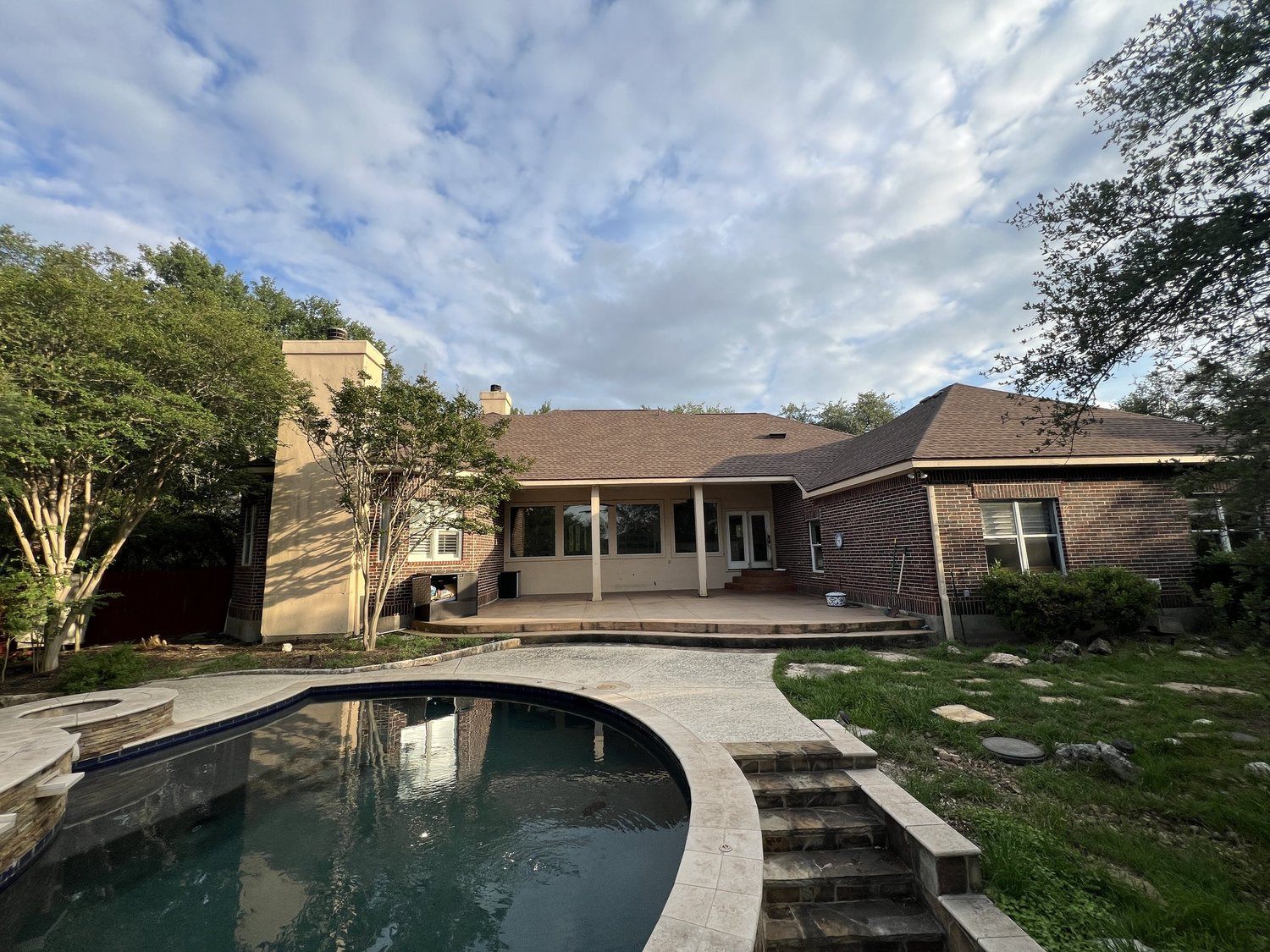
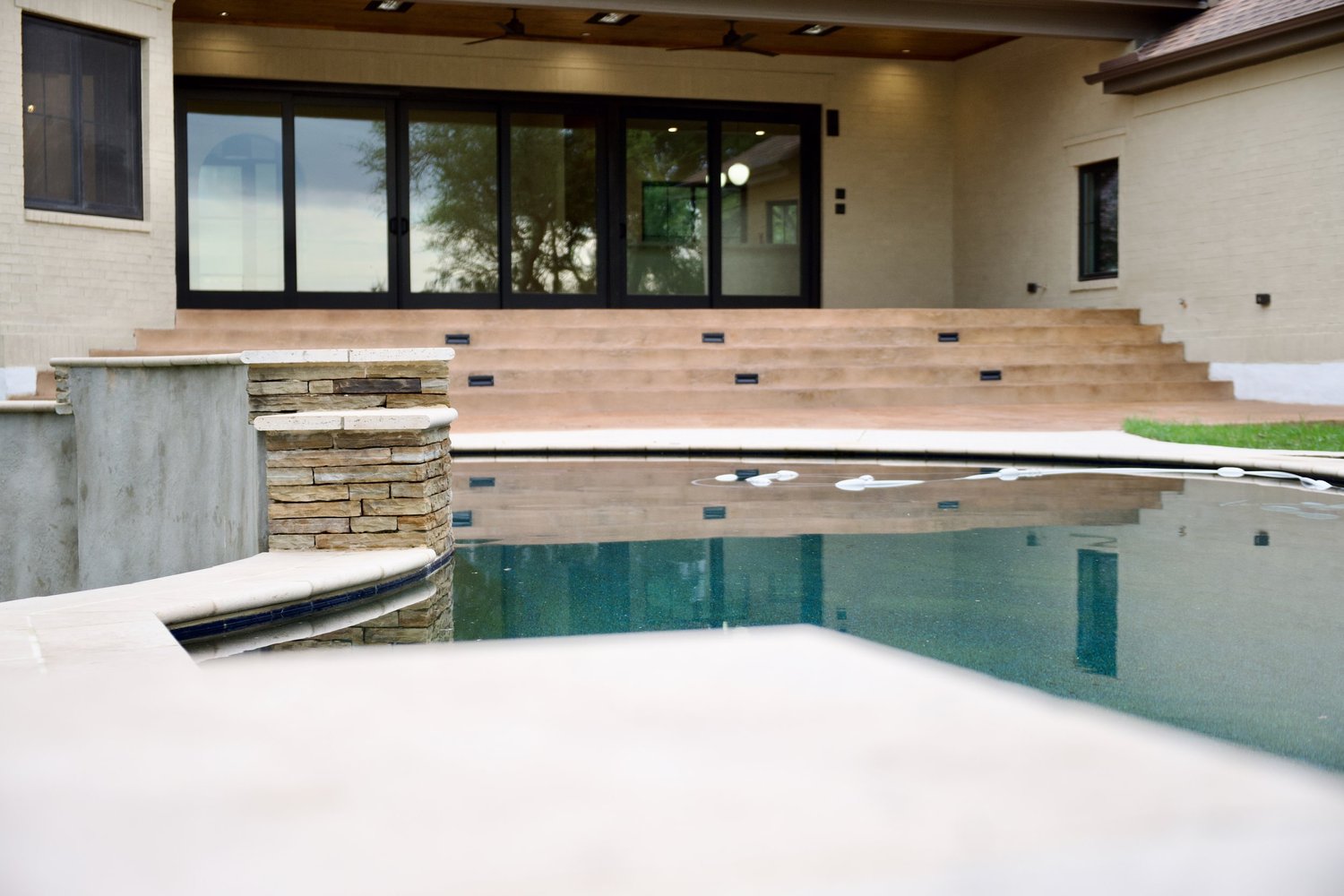
One project, photographed as it stands, numbers included. A 3,100-square-foot San Marcos house went in as dated brick and came out sixteen months later as the home below.
Remodeling Is Harder Than Building. Hire Accordingly.
A new build starts from zero. A remodel starts from whatever the last thirty years left inside your walls, and the work has to happen around your life at the same time.
Five realities we plan for on every remodel, out loud, before you sign.
What the walls are hiding
Every existing house conceals something: wiring from another era, framing that was never right, plumbing routed by optimism. We investigate before demolition where we can, and the budget carries a written contingency of at least 20 percent from day one, so a discovery becomes a line item instead of a crisis.
The rooms we are not touching
Half of remodeling well is protecting what stays: floors covered, openings sealed against dust, the finished side of the house treated as finished work, because it is. The parts of your home we never touch should look exactly that way when we leave.
Whether you can live through it
Some projects allow you to stay; some make staying miserable or unsafe. We answer that question before contract, based on utilities, dust, safety, and duration, so your family plans housing around facts instead of hopes.
One push or phases
Phasing keeps part of the house livable but mobilizes trades more than once, which costs time and money. One continuous push is cheaper and faster but takes the whole house. We price the trade-off both ways when it genuinely exists.
Old meets new, invisibly
The test of a luxury remodel is the seam: where new work meets original structure, floors, and rooflines. Getting that seam invisible is planning work that happens in design, which is exactly where our featured project earned its result.
How a Remodel Runs With Us
Walk the house
We tour the home together and hear what is failing you about it. You get our early read on what the structure can support, whether you could live through the work, and a realistic range for the scope you are describing.
Design and investigation
Design develops alongside targeted investigation of the existing house, so the plan is drawn around what is actually behind your walls. Wherever old construction will meet new, we document the tie-ins during design, on paper, while changes are still cheap.
The priced proposal
You get a written scope with named allowances and exclusions, the contingency stated plainly, and the rules for hidden conditions and change requests agreed before demolition day, while everyone is still calm.
Build, protect, hand back
Construction follows the occupied-home disciplines above, coordinated personally by Vanessa and Dan, and ends with a final walkthrough of a house that feels new everywhere we worked and untouched everywhere we did not.
Remodel Pricing, In the Open
The flagship
Whole-Home Remodel
- Typically 12 to 24 months, depending on scope
- Written contingency of at least 20 percent, day one
- Occupancy and phasing decided before you sign
Why remodel pricing runs higher per foot than new construction: the work threads through an existing structure instead of starting clean. Town-specific factors, from permits to floodplain rules on older river houses, live on our Dripping Springs and Wimberley pages. Considering building a new custom home instead? Compare both sets of numbers before you decide.
Luxury Remodeling Questions
What counts as luxury home remodeling?
For us it means work where the design, materials, and finish quality match custom-home standards: whole-home remodels, large additions, kitchens built around professional appliances, and primary suites finished to hotel-spa level. The scale can vary. The standard of execution does not.
Do we need to move out during the remodel?
It depends on the project, and we will give you the real answer rather than the one you want to hear. Safety, working utilities, how much of the house is opened up, dust containment, and how long the work runs all factor in. A kitchen or suite is often livable-through; a whole-home remodel usually is not. We settle this question before you sign, not after demolition.
Can a whole-home remodel be done in phases?
Sometimes, and it is worth an honest conversation. Phasing can keep part of the house livable, but it usually costs more in total and stretches the calendar, because trades mobilize more than once. We lay out both paths with numbers so you choose with open eyes.
How do you handle hidden conditions and change orders?
They are two different things and we treat them differently. Hidden conditions are what an existing house conceals until walls open, which is why remodel budgets carry a written contingency of at least 20 percent from day one. Change orders are choices you make along the way, and each one is priced in writing before the work proceeds.
When does remodeling beat moving?
When what you love cannot be bought again: the land, the trees, the neighborhood, the school zone, the ten-minute drive to people you care about. If the location is replaceable and the house fights you structurally, moving or rebuilding can genuinely win, and if that is what we see on the walkthrough, we will say so.
How do financing and warranty work for a major remodel?
Financing: we are not a lender, and remodels of this scale are commonly funded through renovation loans or equity-based lending, so talk to your lender early about appraisal and draw requirements. Warranty: your agreement defines the coverage in writing, and we review it together before you sign anything.
Schedule a Call
Ready to talk about your remodel? Call us or send the form.
We will get back to you and set up a time to talk.
Vanessa answers this number, weekdays 9 to 5.